
.jpg)
With the introduction of Artificial Intelligence (AI), a novel legal paradigm has emerged. That is the "Right of Publicity." It has officially become the new term for "Copyright." In 2026, the fashion industry realised that a model's face, voice, and even their distinctive gait are not simply their natural attributes, but valuable digital capital. We no longer talk about hiring a model’s presence and services, but about licensing data. If a brand uses AI to superimpose a famous model’s face onto a generated body without the appropriate payment, this is no longer just “technical processing,” but identity theft.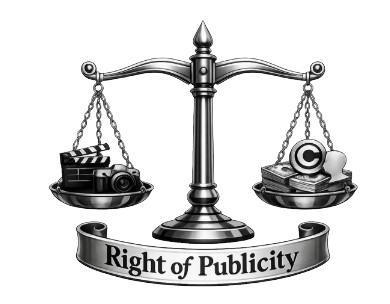
When are real models paid? In the modern world, financial relationships between models and brands are regulated by three key scenarios that ensure the human factor remains financially protected:
"Digital Twin" Licensing. This is the most common form of working arrangement for top models. The process begins with a precise 3D scan of the body and face. Instead of the traditional one-time fee for a photo shoot, the model receives a fixed sum for the creation of the avatar and additional royalties for each use. These royalties are paid for every campaign in which the digital twin appears. Thus, the model can “work” in Paris, New York, and Tokyo simultaneously while they are physically on vacation.
Fine-tuning a specific model. This is a more complex scenario in which the brand wants to create images that “carry the spirit” of a specific individual. The AI is trained on thousands of archived photos of the model to learn their micro-expressions and poses. This “data training” requires a special license, as the final product uses the model’s unique identity as its primary resource.
.jpg) Transfer of rights to voice and likeness. Inspired by SAG-AFTRA contracts, modeling contracts now include “digital likeness” clauses. These clauses explicitly prohibit the employer from using the filmed material for purposes other than those originally agreed upon, or from manipulating it via AI for new campaigns without new consent and additional payment.
Global Regulations. The legal chaos of the early 2020s has been succeeded by strict legal regulations in key jurisdictions, such as:
European Union (EU AI Act). As a leader in the ethical governance of technology, the EU requires full transparency. Any image generated or manipulated using AI must be labeled as such. This serves as a safeguard for models, as a brand cannot arbitrarily alter their features, race, or age through algorithms without signing an attachment to the contract. This law protects the model’s authenticity and identity as a brand.
United States (California and Tennessee). The United States relies on the protection of individual rights. In Tennessee, the ELVIS Act pioneered legislation protecting the voice and likeness as irrevocable human rights against AI cloning. In California, AB 2602 mandates representation by attorneys or unions when signing contracts for digital replicas, ensuring that young models do not accidentally “sell their souls” to a software corporation forever.
China. Here, the focus is on security and state control. Mandatory digital watermarks have been introduced, and using someone’s face for a synthetic image requires written consent recorded in an official registry. This effectively eliminates the possibility of “deepfake” advertisements without the model’s approval.
 The fashion industry in 2026 hasn’t disappeared. Rather, it has simply rewritten its software. Competing with AI is a fact, but it has forced models to become more than just faces. Now they are entrepreneurs managing their own digital capital. In a world where AI can create the “perfect” look for pennies, human emotion, charisma, and the right to speak out have become the most valuable commodities on the market. The future of fashion lies in the interaction between the efficiency of the algorithm and human authenticity, protected by laws that ensure no one can be replaced without their consent.
Author - Teodora Maude
Sources:
https://www.sagaftra.org/contracts-industry-resources/member-resources/artificial-intelligence
https://www.mckinsey.com/industries/retail/our-insights/state-of-fashion
https://www.google.com/search?q=https://www.theguardian.com/technology/ai-right-of-publicity
.jpg)
.jpg)
.jpg)